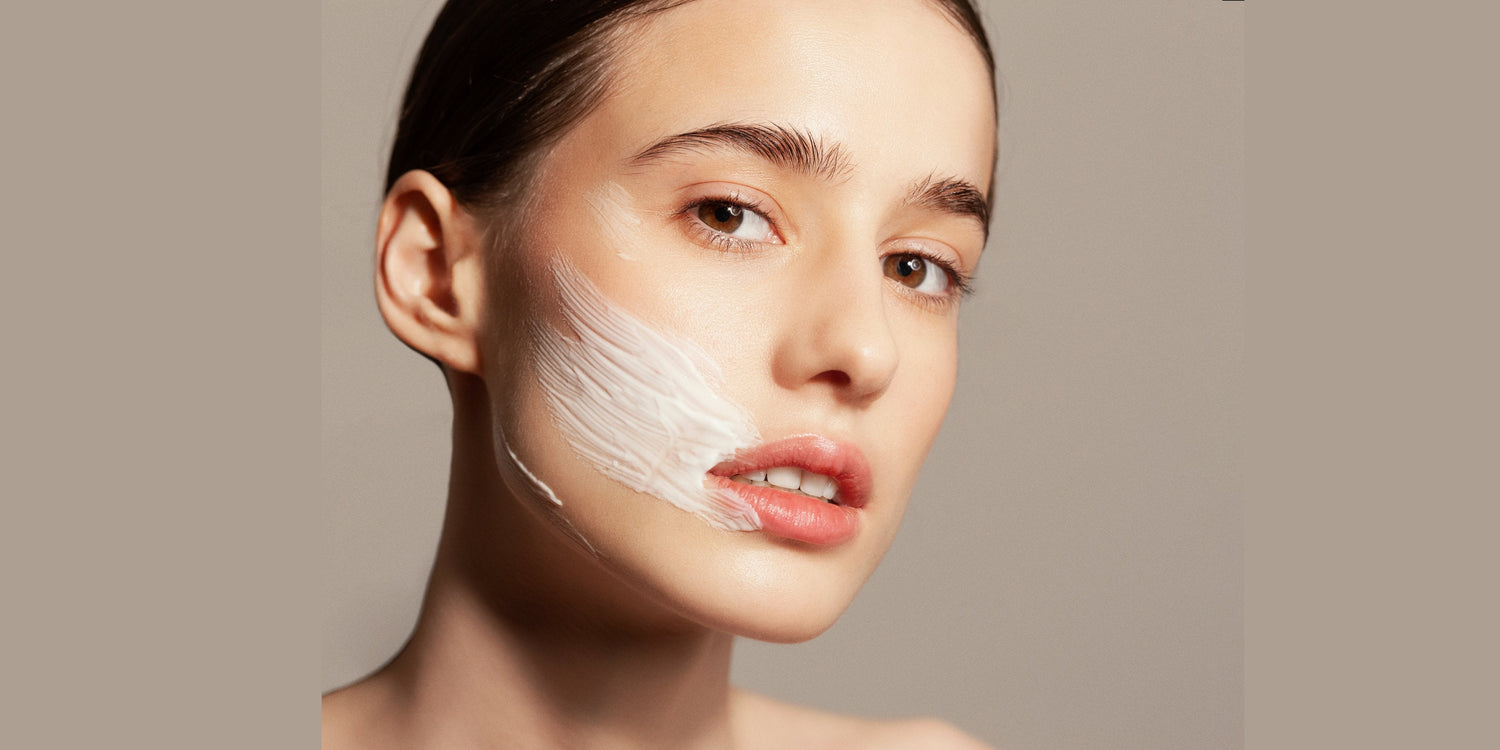


Oily but Tight Skin: Dry or Dehydrated? | A Professional Clinical Guide
Gary WilliamsProfessional Education | Consultation Framework | Oily but Tight Skin
Oily skin that feels tight is usually not a dry skin type. It is more likely oily skin or combination skin experiencing dehydration, surface disruption, unsuitable cleansing, excessive active use or insufficient hydration support.
For clinics, the core pathway remains The Clarity System - Super Clear Collection. Dehydration and tightness refine product choice, pacing and support within that pathway. They do not redefine the skin type.
A client sits down and says, “My skin is oily, but it also feels dry.”
They may report shine by lunchtime, visible congestion through the T-zone and skin feels tight immediately after cleansing. They may also describe flaking, rough texture, stinging or the sense that every moisturiser is either not enough or too heavy.
This is not a contradiction. It is a consultation clue.
Oily, shiny and tight: the consultation contradiction
There are two ways to interpret the client’s description.
The first is concern-led: the skin feels dry, so prescribe a richer dry-skin routine.
The second is physiology-led: the skin continues to behave as oily or combination, but its water balance, surface condition or routine architecture may be misaligned.
The second interpretation is usually more useful for professional recommendation.
The central distinction: skin type versus skin condition
Skin type establishes the core pathway. Skin condition refines it.
Within the Skin Virtue professional system, oily or combination skin begins with The Clarity System - Super Clear Collection. Normal or dry skin begins with The Barrier Recovery System - Pure Nourish Collection. Visible ageing, radiance, tone and firmness concerns may be supported with Longevity Treatments - Future Advanced Collection as a specialist layer.
Dehydration, tightness, sensitivity, surface flaking, congestion and reduced comfort are conditions. They affect product selection and routine pacing, but they do not automatically change the client’s underlying collection.
Can oily skin be dehydrated?
Yes. Sebum and water perform different roles in skin behaviour.
Sebum contributes to surface lubrication. Hydration relates to water content within the stratum corneum and the skin’s ability to retain that water. An oily client can therefore show visible shine, pore prominence and congestion-prone behaviour while also experiencing tightness, dullness, roughness and fine dehydration lines.
The professional conclusion is not that oily skin has become dry. It is that the oily skin environment may be functioning with reduced hydration continuity or unnecessary surface stress.
Do not treat the client’s word “dry” as the diagnosis. Clarify whether they mean tight, rough, flaky, uncomfortable, lacking oil or simply unsettled after cleansing.
Why common routines fail
The client sees oil and tries to remove more of it. Cleansing becomes more frequent, water becomes hotter, clarifying steps multiply and moisturising support becomes lighter or disappears entirely.
The temporary matte finish feels like success. The tightness that follows is interpreted as proof that the skin is clean.
Then the surface becomes uncomfortable, the client reaches for a heavy cream, and the routine starts swinging between aggressive clarification and overcorrection.

Dry skin versus oily or combination skin with dehydration
| Consultation feature | Dry skin type | Oily or combination skin with dehydration |
|---|---|---|
| Sebum behaviour | Lower oil presence | Visible excess sebum remains present |
| Typical appearance | Dullness, roughness and lower shine | Shine with tightness, congestion or uneven texture |
| Client language | “My skin rarely feels oily” | “I am oily, but my skin feels dry” |
| Response to rich textures | Often comfortable | May feel heavy or reduce adherence |
| Core Skin Virtue pathway | The Barrier Recovery System - Pure Nourish Collection | The Clarity System - Super Clear Collection |
| Routine refinement | Hydration and lipid support | Hydration continuity within a clarity-led routine |

The correct Skin Virtue pathway
If the client’s skin is oily or combination, the foundation remains The Clarity System - Super Clear Collection.
The professional role of this pathway is to support visible clarity, balanced-looking oil flow, refined texture, hydration continuity and clearer-looking skin without unnecessary stripping.
Dehydration changes how the routine is paced and supported. It does not move the client into a dry-skin collection.
Product roles within an oily-but-tight pathway
Super Clear Cleanse
Professional role: gentle cleansing that removes impurities without making post-cleanse tightness the desired result.
Active function: clarification and surface cleansing.
Visible outcome: fresh, clearer-looking skin prepared for the next routine step.
Super Clear Clarifying Solution
Professional role: support visible refinement and congestion-prone skin within a controlled routine.
Active function: clarity, regulation and texture refinement.
Visible outcome: more refined-looking and balanced skin.
Super Clear Purifying Crème Gel
Professional role: provide lightweight hydration and clarity support for oily or combination skin.
Active function: hydration continuity with clarity support.
Visible outcome: more comfortable, balanced and refined-looking skin without a heavy finish.
Super Clear Essential Cream
Professional role: support clients who need greater comfort and moisture retention within the Super Clear pathway.
Active function: hydration and barrier-supportive conditioning within an oily or combination framework.
Visible outcome: smoother, more resilient and comfortable-looking skin while preserving the correct collection architecture.
Where Future Advanced fits
An oily but dehydrated client may also present with visible lines, dullness, uneven-looking tone, reduced radiance or firmness concerns.
These concerns do not replace the Super Clear core pathway. They create a specialist layering opportunity through Longevity Treatments - Future Advanced Collection.
The clinic is not forcing every concern into one collection. It is assigning the correct foundation and then layering by objective.

A five-minute consultation framework
Confirm the oil pattern
Ask when shine appears, where it appears and how quickly oil returns after cleansing.
Clarify what “dry” means
Separate tightness, flaking and roughness from a genuine lack of oil.
Audit the routine
Review cleansing frequency, water temperature, active layering, moisturiser use and recent treatments.
Separate type from condition
Keep the oily or combination foundation and refine the routine for dehydration.
Prescribe by function
Explain which step cleanses, clarifies, hydrates, supports comfort or targets specialist concerns.
Record the logic
Document skin type, current condition, product function and agreed visible outcome for follow-up.
The commercial value of getting this right
This distinction affects more than technical accuracy.
- Recommendation confidence: the professional can explain why tightness does not automatically trigger a dry-skin routine.
- Full-routine adoption: the client understands that clarification and hydration are complementary functions.
- Better adherence: a routine that feels comfortable and logical is more likely to be followed.
- Less product switching: the client is less likely to move randomly between blemish products, oils and heavy creams.
- Clearer retail conversations: the clinic prescribes a system rather than reacting to one symptom.
What clinics should avoid saying
| Avoid | Use instead |
|---|---|
| “Your oily skin has turned dry.” | “Your skin is oily or combination, but it appears dehydrated.” |
| “You need to stop all clarifying skincare.” | “We will refine clarification and hydration within the correct pathway.” |
| “Tightness means the cleanser is working.” | “Comfort after cleansing is part of a well-balanced routine.” |
| “You need the richest moisturiser.” | “You need hydration support matched to an oily or combination skin environment.” |
Frequently asked questions
Can oily skin also be dehydrated?
Yes. Oily skin can produce visible sebum while lacking sufficient water or experiencing reduced hydration continuity. Oil production and skin hydration are distinct aspects of skin behaviour.
Does oily skin become a dry skin type when it feels tight?
No. Tightness, flaking and dehydration refine the professional routine, but they do not automatically redefine oily or combination skin as dry.
Why does oily skin feel tight after cleansing?
Possible causes include unsuitable cleansing, excessive cleansing, hot water, poorly paced active use or insufficient hydration support. The full routine should be reviewed rather than judging one product in isolation.
Should an oily but dehydrated client use Pure Nourish?
Not as the automatic core pathway. Oily or combination skin remains within The Clarity System - Super Clear Collection. Dehydration refines product selection and routine pacing within that system.
Does oily skin still need moisturising support?
Yes. Oily skin may still need hydration continuity and moisture-retention support. The texture and formulation should suit an oily or combination skin environment.
Where does Future Advanced fit for oily skin?
Longevity Treatments - Future Advanced Collection may be layered with Super Clear when visible ageing, radiance, tone, firmness or advanced skin-quality concerns are present.
Oily skin can feel dry without becoming a dry skin type.
The client may be experiencing dehydration, excessive cleansing, poorly paced active layering or insufficient hydration support. The correct response is to maintain the oily or combination pathway, refine product choice and pacing, explain active function clearly and connect the routine to a visible outcome.
Build a clearer professional consultation pathway
Move beyond symptom-led product selection with a structured Skin Virtue framework for oily, combination, sensitive and dehydration-prone clients.
